When couples picture an outdoor wedding, they usually picture the best version of the weather. Blue skies. Comfortable temperatures. Maybe a light breeze coming off the water. No one is adding sideways rain to their wedding vision board (understandably).
But when you're planning a New York wedding, weather needs to be part of the conversation. Having an outdoor wedding rain plan doesn't mean you're expecting bad weather. It means you're making sure the celebration you've spent months planning will still feel beautiful and intentional if Mother Nature has other ideas.
The best rain plans don't feel like backup plans at all. They're thoughtfully designed alternatives that allow your wedding to move forward without sacrificing the experience you've envisioned.
If you're planning an outdoor New York or Long Island wedding and want someone thinking through both Plan A and Plan B, I’d love to help. Thoughtful contingency planning is one of the many ways we make sure our couples can actually enjoy their wedding day instead of refreshing the weather app every five minutes.
Why Every Outdoor Wedding Needs a Real Rain Plan
I completely understand why couples don't want to talk about rain. When you've fallen in love with a waterfront ceremony or garden cocktail hour, discussing an indoor alternative can feel like admitting defeat before the wedding even happens.
It isn't.
A solid outdoor wedding rain plan gives you more freedom to enjoy the days leading up to your wedding because you already know what will happen if the forecast changes.
And a real rain plan needs to be more specific than we'll just move everything inside.
Where will the ceremony take place? Can that space comfortably accommodate your guest count? What happens to cocktail hour? Will rentals need to move? Does the timeline need to change? How will florals and decor be repurposed?
Those decisions are much easier to make months in advance than three hours before guests arrive.
Common Outdoor Wedding Rain Plan Mistakes Couples Regret
One of the biggest mistakes I see is choosing a venue based entirely on its outdoor spaces without giving enough consideration to the backup option.
If you love the ceremony lawn but dislike the indoor ceremony space, that's important information to know before signing a contract.
Another mistake is waiting too long to make the weather call. Your florist, rental company, caterer, musicians, lighting team, and venue may all need time to adjust.
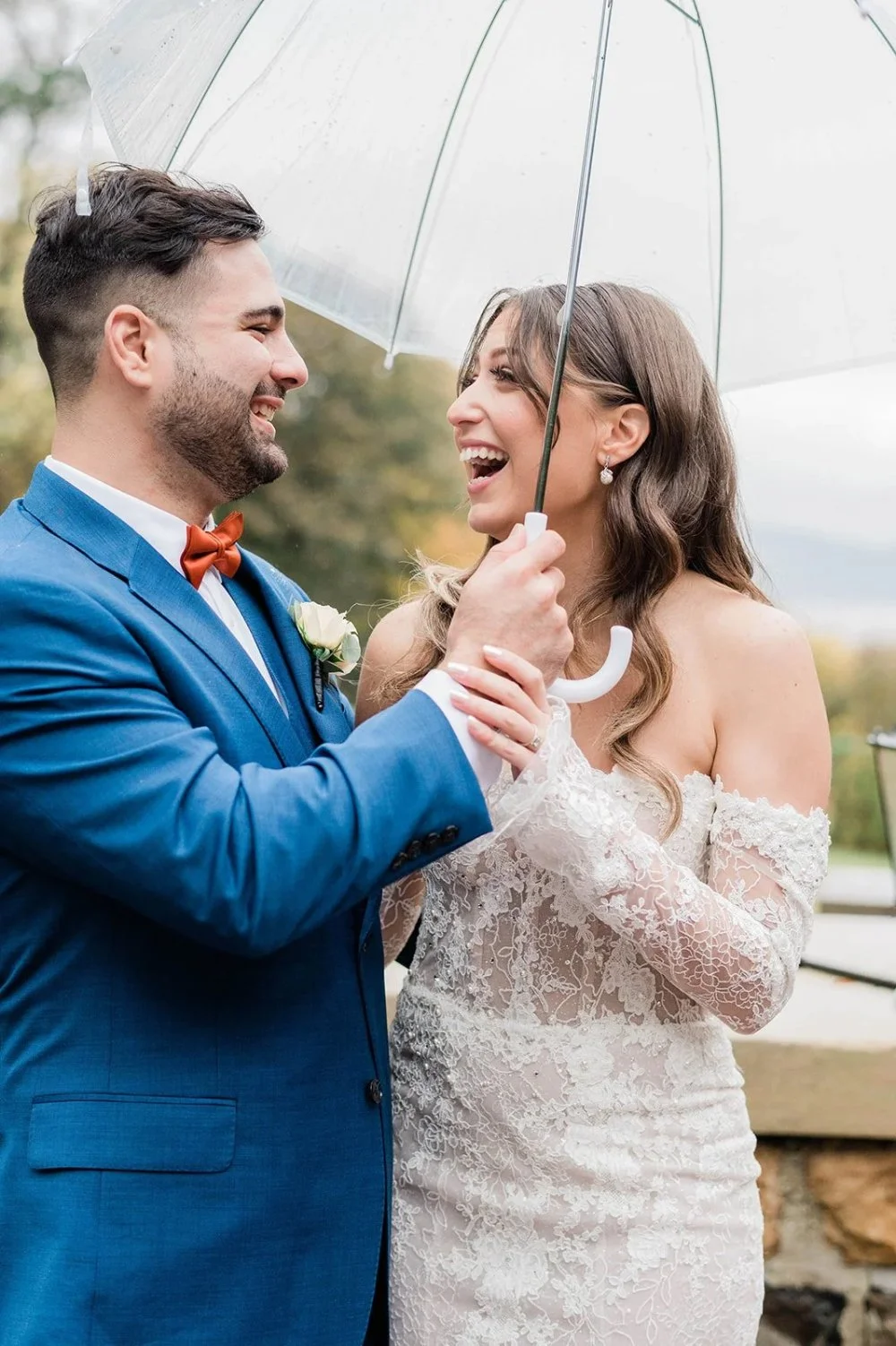
There's also guest comfort to consider. A little drizzle might photograph beautifully, but asking 150 guests to sit on wet chairs while wearing formal attire is another story.
Your outdoor wedding rain plan should protect the guest experience just as much as the design.
Wondering how New York weather could affect your wedding plans? Read my guide to the best month to get married in New York for a season by season look at weather, pricing, photography, and vendor availability.
Tent Weddings vs. Indoor Flips: What You Should Know
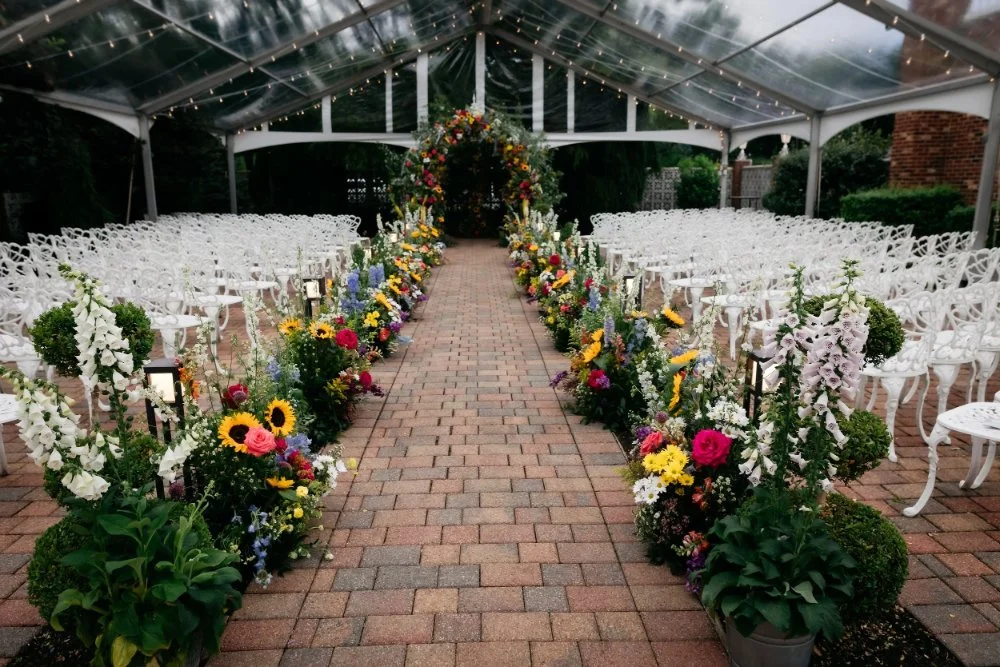
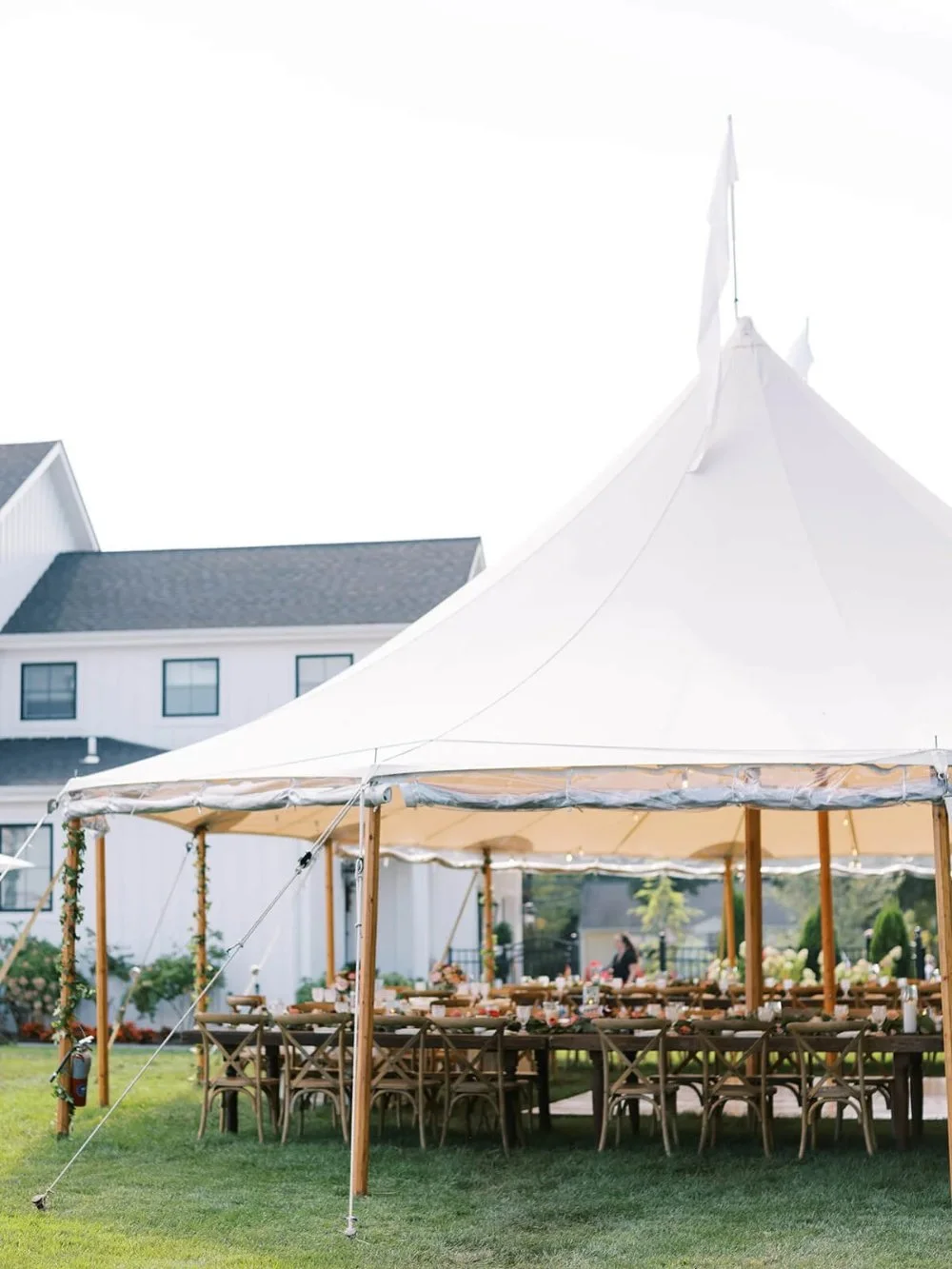
For some New York and Long Island wedding venues, a tent is the primary weather backup. At others, the venue may need to flip an indoor space from ceremony to reception.
Both can work beautifully, but they require different planning.
A tent offers the feeling of being outdoors while providing protection from rain. However, tents come with their own considerations. Flooring, sidewalls, lighting, temperature control, power, drainage, and access all need to be discussed.
An indoor flip can be incredibly effective too, especially when the venue team has a well practiced system. The key is understanding how long the transformation takes and where guests will be during that transition.
Neither option is automatically better. What matters is knowing exactly how your venue handles weather before the wedding day.
Wondering what a decade of planning New York weddings has taught me? Read the biggest lessons I’ve learned in 10 years of wedding planning and how those experiences have shaped the way I plan, design, and care for my couples today.
New York and Long Island Wedding Weather Can Change Quickly
Weather is especially important when you're planning a New York wedding.
Spring can bring rain and surprisingly cool temperatures. Summer weddings can face heat, humidity, and thunderstorms. Fall may give us those gorgeous crisp afternoons we all love, but temperatures can drop quickly once the sun goes down.
Long Island weddings also come with coastal weather considerations, particularly at waterfront venues.
That's why I don't look at an outdoor wedding rain plan as something that's only about rain. We're thinking about wind, temperature, humidity, ground conditions, and guest comfort too.
Sometimes the question isn't can we have the ceremony outside?
It's should we?
And those are two very different questions.
Make Your Backup Space Feel Like Part of the Design
One of my favorite ways to approach a rain plan is to design it from the beginning rather than treating it as an afterthought.
Your backup space should still feel connected to the wedding you've planned.
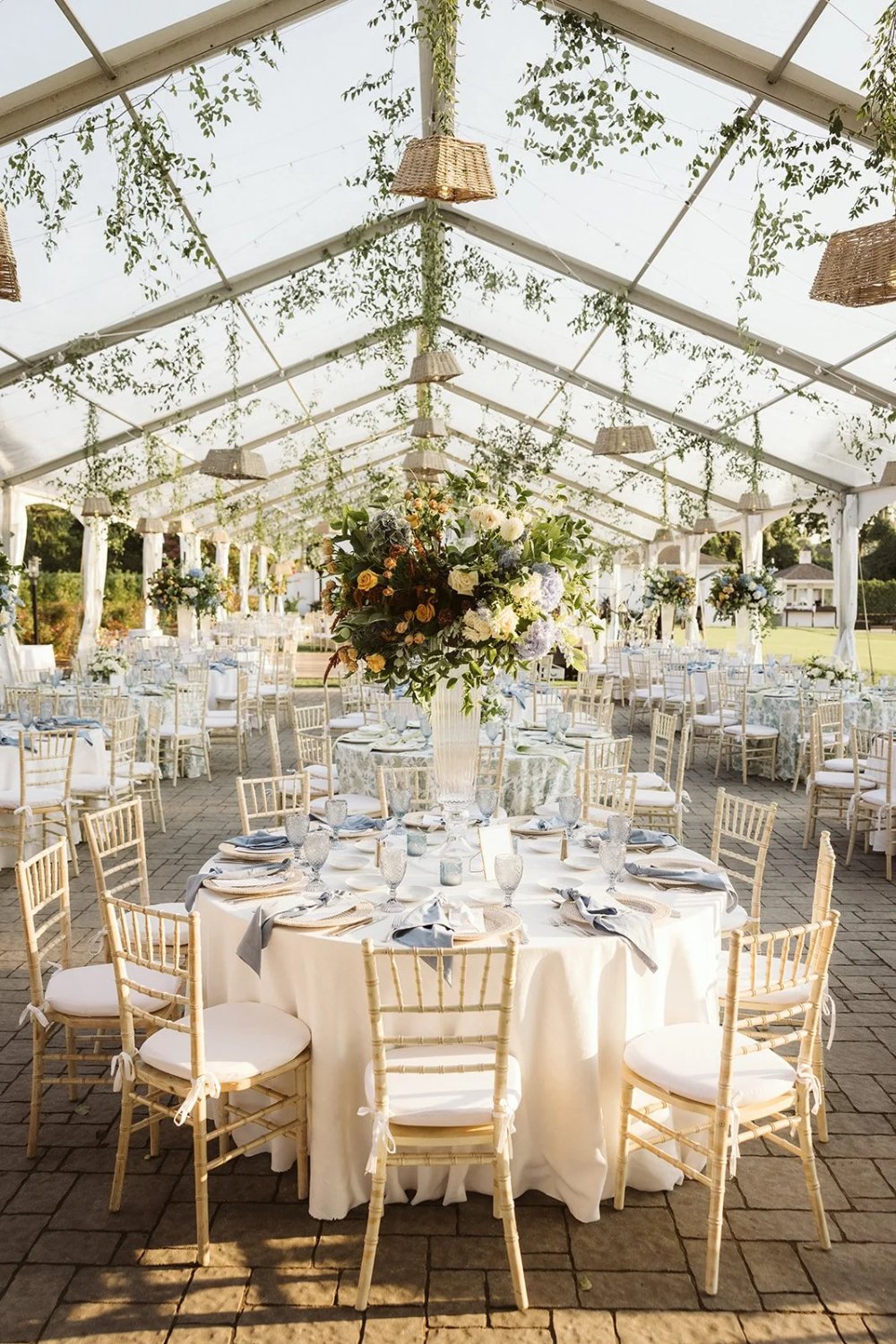
Florals can be designed so key arrangements work in either location. Ceremony installations may be created with relocation in mind. Candles, linens, lighting, draping, and smaller decor elements can help transform an indoor space if the celebration needs to move.
Even your wedding reception layout can influence the plan. Knowing where tables, bars, entertainment, and decor can shift gives your vendor team much more flexibility.
You don't need to duplicate your entire design. You just need enough continuity that Plan B still feels like your wedding.
Your Vendors Need to Be Part of the Outdoor Wedding Rain Plan
Weather changes affect far more than the ceremony location.
Your photographer may adjust the portrait timeline. Your florist might need to relocate installations. Musicians may need protection for instruments and electrical equipment. Rental companies could need additional flooring or tent components. Transportation timing may change if guests can't comfortably walk between locations.
That's why communication between vendors matters so much.
A strong vendor team isn't waiting for someone else to figure out what's happening. Everyone understands the plan, the decision deadline, and what needs to change if the weather shifts.
This is also where an experienced planner becomes especially valuable.
How a Wedding Planner Handles a Weather Pivot
Ideally, your guests should never know how much work went into changing the plan.
As a wedding planner, I'm watching the forecast, communicating with the venue and vendor team, confirming decision deadlines, and thinking several steps ahead.
If we need to pivot, the goal is to do it calmly and efficiently.
Your ceremony moves. Florals are redirected. Rentals are adjusted. Musicians know where they're going. The timeline gets updated. Family members receive new instructions.
Meanwhile, you're getting ready with your favorite people instead of coordinating a tent installation from the hair and makeup chair.
That's exactly how it should be.
Final Thoughts on Creating an Outdoor Wedding Rain Plan
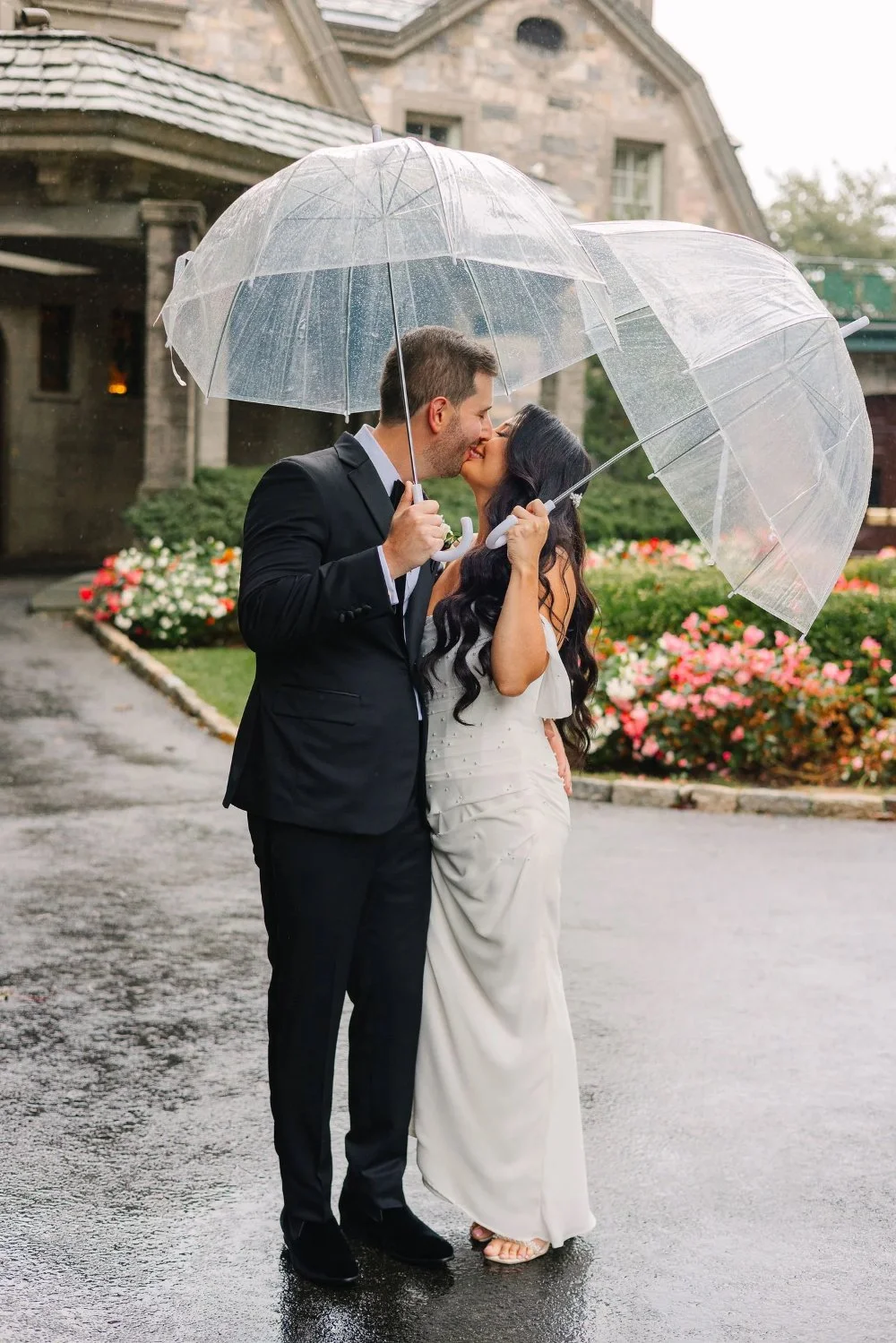
An outdoor wedding rain plan isn't about compromising your wedding vision. It's about protecting it.
The weather may determine where your ceremony happens, but it doesn't determine whether your wedding feels beautiful, meaningful, or memorable. Thoughtful planning gives your vendor team the flexibility to make changes while keeping the experience seamless for you and your guests.
Whether you're planning a waterfront Long Island wedding, a garden celebration, or an outdoor New York wedding, make sure you love Plan B almost as much as Plan A. Hopefully, you'll never need it. But if you do, you'll be very glad it's there.
If you're planning a New York wedding and want a planner who will think through the beautiful details and the less glamorous what ifs, I’d love to support you. I take on a limited number of weddings each year so I can provide highly personalized planning and design services, including the behind the scenes preparation that keeps your wedding feeling effortless no matter what the forecast decides to do.